
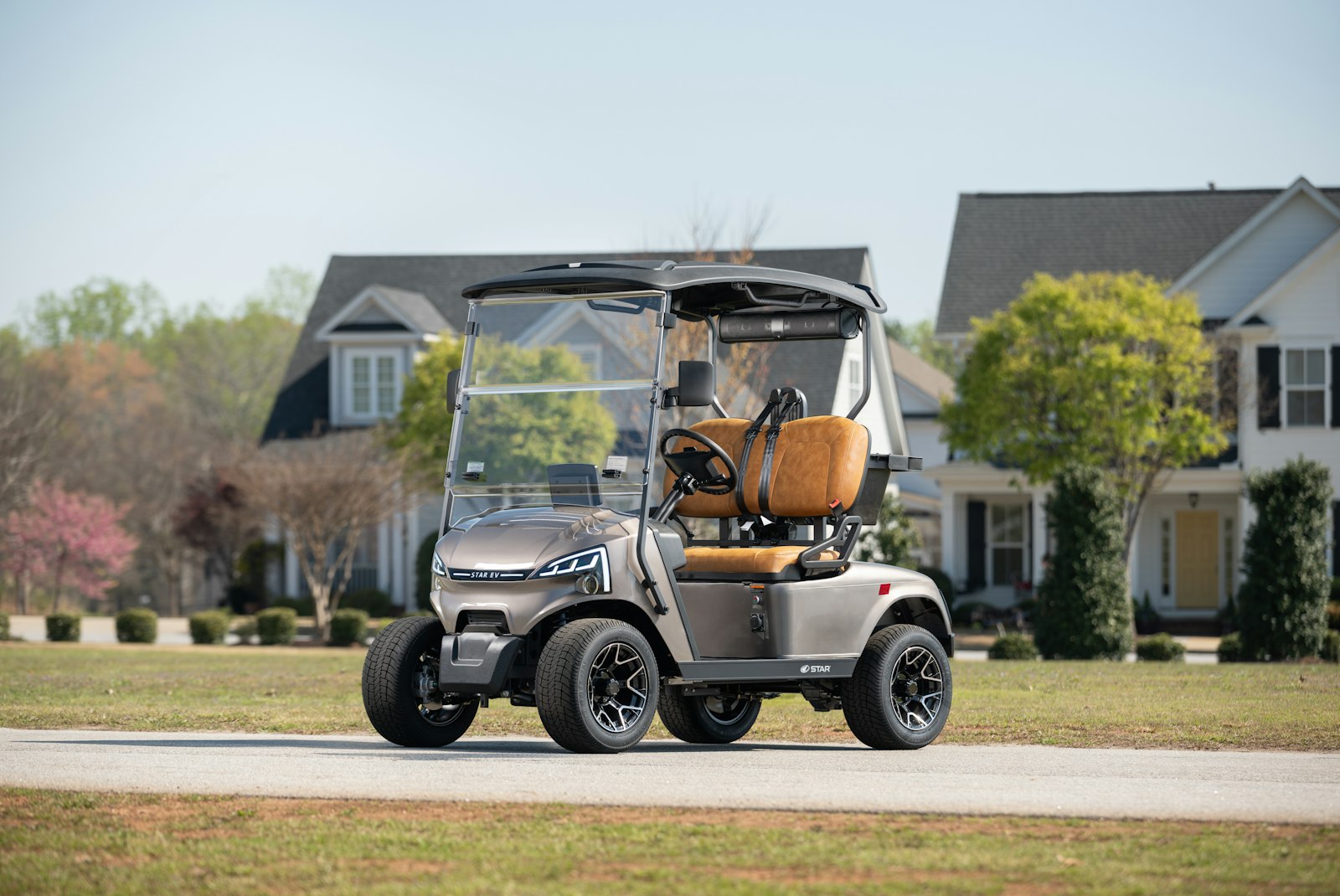
If your golf cart is running on lead-acid batteries and you’re replacing them for the second or third time, the math starts to look different. The upfront cost of a lithium conversion is higher—but for most cart owners in Woodstock and Cherokee County, it’s the last battery purchase they make. This is a practical breakdown of what a conversion actually involves, what it costs, and how to decide whether it makes sense for your cart.
Lead-Acid vs. Lithium: The Real Difference
Both battery types move your cart—but they do it differently, and those differences add up over years of ownership.
Weight. A standard 48V lithium battery pack weighs approximately 100 lbs, while a comparable lead-acid set weighs up to 200 lbs—a difference of roughly 100 pounds, according to Vatrer Power’s technical upgrade guide. Less weight means better acceleration, easier handling on hills, and less wear on your cart’s frame and tires over time.
Charging time. Lead-acid batteries need 8–10 hours to fully charge. Lithium takes 4–6 hours. If you use your cart daily, that difference matters—you can charge overnight and start fresh every morning, or top off in the afternoon for an evening ride, without worrying about catching the charge window.
Usable capacity. Lead-acid batteries lose power as they drain—you get strong performance at full charge, noticeably weaker performance in the bottom half of the battery. Lithium delivers consistent power until the battery is nearly empty. You get the same acceleration on hole 14 as you did on hole 1.
The Long-Term Cost Comparison
The sticker price on a lithium conversion is higher than a straight lead-acid replacement. The 10-year picture is different. Flat Earth Equipment’s 2026 analysis puts the 10-year total cost of ownership for the lead-acid path at approximately $3,140, compared to roughly $2,149 for lithium—a difference of about $1,000 over the same period, before accounting for the maintenance savings.
Lead-acid batteries require watering, terminal cleaning, and equalization charges. Skip them and the batteries fail early. Lithium is sealed and maintenance-free—there’s nothing to water, nothing to clean. That’s not just money saved; it’s also the kind of thing that gets forgotten, and with lead-acid, forgetting costs you a pack.
What the Lifetime Warranty at Prime Golf Carts Actually Means
New golf carts at Prime Golf Carts of Woodstock come standard with lithium batteries and a lifetime warranty on those batteries. Not a two-year warranty. Not a limited warranty with a page of exceptions. A lifetime warranty backed by us directly.
That matters because the lithium battery in a brand-new cart is one of the components you should never have to think about again. You’re not going to replace it in four years. You’re not going to replace it in eight years. If something goes wrong with it, we stand behind it. That’s the deal on every new cart that leaves our Woodstock location.
For existing carts—whether you bought your cart from us or somewhere else—we handle battery conversions in our service department. The pricing depends on your cart’s voltage configuration (36V vs. 48V) and the battery capacity that fits your usage. We will not upsell you on capacity you don’t need. Our job is to match you with the right setup for how you actually use the cart.
Is a Conversion Right for Your Cart?
Lithium makes the most sense when:
- Your cart is in otherwise good shape and you’re facing your second or third lead-acid replacement.
- You use the cart daily or multiple times a week—the more you use it, the faster lithium’s lifespan advantage compounds.
- You use the cart on hills or for longer stretches where consistent power matters.
- You want to keep the cart for another 10+ years without thinking about batteries again.
Lithium makes less sense when your cart has significant mechanical issues that would cost more to fix than the cart is worth. Before we recommend a conversion, we look at the cart. If the better move is a trade-in toward a new cart with a factory lithium pack and a lifetime warranty, we’ll say that.
FAQ
How much does a lithium golf cart battery conversion cost at Prime Golf Carts?
The price depends on your cart’s voltage configuration and the battery capacity you need. We give straight quotes with no games—call us or stop in and we’ll tell you exactly what it costs for your specific cart. Conversions are done in our Woodstock service department at golfcartsofwoodstock.com/golf-cart-repair-and-service.
How long do lithium golf cart batteries last?
Lithium (LiFePO4) batteries are rated for 6,000+ charge cycles, which translates to 12 or more years of normal use, compared to 4–6 years for lead-acid. On new carts from Prime Golf Carts of Woodstock, lithium batteries are covered by a lifetime warranty.
Do you offer 0% financing on conversions?
Financing options, including 0% for 24, 36, and 48 months, are available for new cart purchases. For conversions, payment options depend on the total service ticket—ask us when you schedule your appointment and we’ll walk you through what’s available.
Can any golf cart be converted to lithium batteries?
Most 36V and 48V golf carts—which covers the overwhelming majority of carts on the road—can be converted. The main variables are battery size (Ah capacity) and the space in your battery compartment. We check this before recommending a kit. Some older carts have wiring or charger configurations that need updating as part of the conversion; we handle that in the same service visit.
Do I need a new charger after a lithium conversion?
Usually yes. Lead-acid chargers use a different charging profile that can damage a lithium pack or charge it inefficiently. A compatible lithium charger is typically included or recommended as part of the conversion. We factor this into the quote so there are no surprises when you pick up the cart.